Introduction
In today’s digital world, having a website is not enough. If people cannot find your website on Google, it becomes difficult to attract visitors, generate leads, and grow your business online. This is where SEO, or Search Engine Optimization, becomes important.
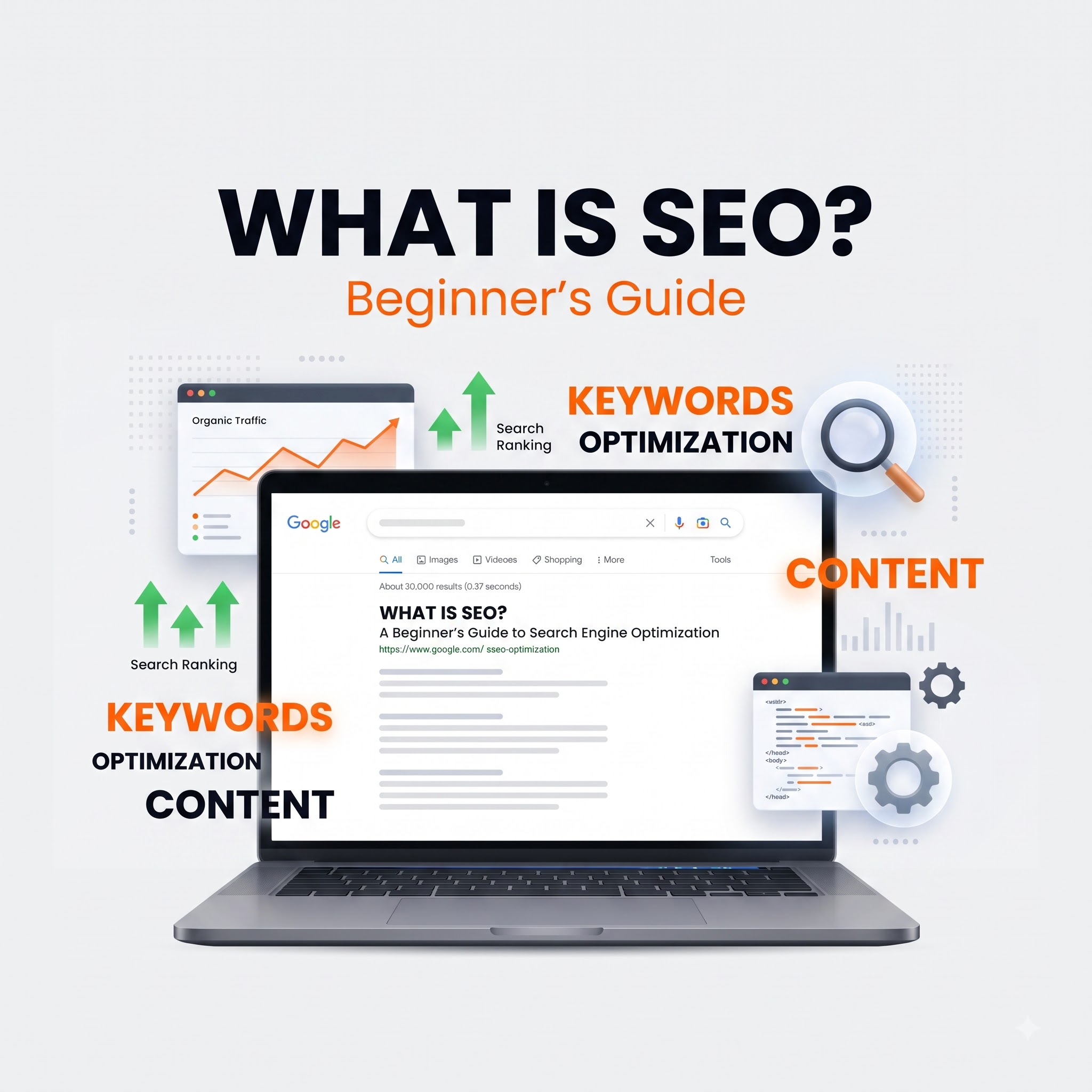
SEO is the process of optimizing a website and its content to improve its visibility in search engine results. When your website appears higher for relevant searches, you can attract more potential customers without paying for every click.
In this beginner’s guide, we will understand what SEO is, how it works, the different types of SEO, and why SEO is important for your business.
What Is SEO?
SEO stands for Search Engine Optimization.
It is a collection of strategies and techniques used to improve a website’s visibility in search engine results pages, commonly known as SERPs.
For example, imagine you have a digital marketing agency in Pune. A potential customer searches Google for:
“Best digital marketing agency in Pune”
If your website is properly optimized for relevant keywords and provides useful information, Google may show your website among the search results.
The goal of SEO is not simply to get more traffic. The real goal is to attract relevant and valuable visitors who are more likely to become customers.
How Does SEO Work?
Search engines such as Google use complex algorithms to discover, understand, and rank web pages.
The process generally involves three important stages:
1. Crawling
Search engines use automated programs called crawlers or bots to discover web pages and understand their content.
2. Indexing
After discovering a page, Google analyzes and stores information about that page in its index. If Google considers the content useful and eligible, it can appear in search results.
3. Ranking
When someone searches for something, Google evaluates many signals to determine which pages should appear first.
Factors such as relevance, content quality, website experience, page performance, links, and search intent can influence rankings.
Why Is SEO Important for a Website?
SEO can provide several benefits for businesses and websites.
1. Increases Organic Traffic
SEO helps your website appear for relevant searches. Higher visibility can lead to more organic visitors from search engines.
2. Builds Online Visibility
When your website consistently appears in search results for relevant keywords, more people become familiar with your brand.
3. Generates Potential Leads
SEO can attract people who are actively searching for your products or services. This makes organic search a valuable source of potential leads.
4. Builds Credibility
Users often trust websites that appear prominently in search results. High-quality content and a professional website can help build credibility.
5. Provides Long-Term Benefits
Unlike paid advertising, where traffic can stop when the campaign stops, well-optimized content can continue attracting organic traffic over time.
However, SEO is not an instant strategy. Results usually require consistent effort, testing, optimization, and patience.
Types of SEO
SEO can be divided into several major areas.
1. On-Page SEO
On-Page SEO focuses on optimizing elements that exist on your website.
Some important elements include:
- SEO-friendly page titles
- Meta descriptions
- Headings
- Keyword optimization
- High-quality content
- Internal linking
- Image optimization
- URL structure
- Search intent
For example, if your target keyword is “SEO services in Pune,” your content should naturally explain your services and provide useful information related to that search.
2. Off-Page SEO
Off-Page SEO focuses on activities outside your website that can help improve its authority and reputation.
One important part of off-page SEO is link building.
When relevant and trustworthy websites link to your content, these links can help search engines understand that your website may be valuable and credible.
Other off-page activities can include digital PR, brand mentions, and building a strong online presence.
3. Technical SEO
Technical SEO focuses on improving the technical aspects of your website so search engines can crawl and understand it effectively.
Important areas include:
- Website speed
- Mobile usability
- Crawlability
- Indexability
- XML sitemap
- Robots.txt
- HTTPS security
- Canonical URLs
- Structured data
- Core Web Vitals
A technically healthy website provides a stronger foundation for SEO.
4. Local SEO
Local SEO is especially important for businesses that serve customers in a specific geographic area.
For example, a business targeting customers in Pune may optimize its online presence for searches such as:
“Digital marketing agency near me”
or
“SEO agency in Pune.”
Optimizing your Google Business Profile, maintaining accurate business information, collecting genuine customer reviews, and creating location-relevant content can support local search visibility.
What Are Keywords in SEO?
Keywords are words or phrases that people enter into search engines when looking for information, products, or services.
Examples include:
- Digital marketing agency
- SEO services
- Google Ads services
- Social media marketing
- Website development
Keyword research helps you understand what your target audience is searching for.
However, successful SEO is not about repeatedly inserting the same keyword into a page. Search engines have become much better at understanding topics, context, and search intent.
Your content should therefore be natural, useful, and written primarily for people.
What Is Search Intent?
Search intent refers to the reason behind a user’s search.
For example:
“What is SEO?”
The user wants information.
“Best SEO agency in Pune”
The user may be researching service providers.
“SEO agency pricing”
The user may be comparing costs before making a decision.
Understanding search intent helps you create content that matches what users actually want.
How to Start SEO as a Beginner
If you are new to SEO, start with the basics:
Step 1: Understand Your Audience
Identify who you want to attract and what problems they are trying to solve.
Step 2: Perform Keyword Research
Find relevant keywords related to your products, services, and topics.
Step 3: Create Useful Content
Write original, informative content that genuinely answers users’ questions.
Step 4: Optimize Your Pages
Improve titles, headings, URLs, images, internal links, and other on-page elements.
Step 5: Improve Technical SEO
Make sure your website is mobile-friendly, secure, crawlable, and provides a good user experience.
Step 6: Monitor Performance
Tools such as Google Search Console and Google Analytics can help you understand website performance, search traffic, and user behavior.
Step 7: Keep Updating
SEO is an ongoing process. Continue improving your content and website based on performance and changes in user needs.
Common SEO Mistakes to Avoid
Beginners often make a few common mistakes:
- Keyword stuffing
- Copying content from other websites
- Creating content only for search engines
- Ignoring search intent
- Using poor-quality backlinks
- Ignoring mobile users
- Having slow-loading pages
- Publishing content without proper research
- Expecting instant results
The best approach is to focus on creating a useful website that provides a great experience for visitors.
Conclusion
SEO is an essential part of digital marketing that helps websites become more visible in search engines and attract relevant organic traffic.
From On-Page SEO and Technical SEO to Off-Page SEO and Local SEO, each area contributes to building a stronger online presence.
If you are a business owner, understanding the fundamentals of SEO can help you make better decisions about your website and digital marketing strategy.
Remember, SEO is not about simply ranking #1 on Google. It is about helping the right people find your business at the right time and providing them with valuable information that encourages them to take action.
If you want to improve your website’s search visibility, generate more organic traffic, and grow your online presence, investing in a well-planned SEO strategy can be a valuable step toward long-term digital growth.
Ready to improve your website’s visibility? Contact Tejas Digital Marketing for professional SEO, Google Ads, Social Media Marketing, and Website Design & Development services.